
Wellness Is Infrastructure
People who serve others carry more than a workload. They carry the urgency of someone’s housing crisis, the grief of community loss, and the responsibility of making difficult decisions with limited resources. When exhaustion follows, we often encourage people to practice self-care, build resilience, or take time off.
Those supports matter, but so do the conditions people return to.
Team wellness is the combination of everyday work conditions, relationships, and supports that help people feel safe, valued, connected, and able to sustain meaningful work. It is something we create together through our culture, leadership, and daily practices.
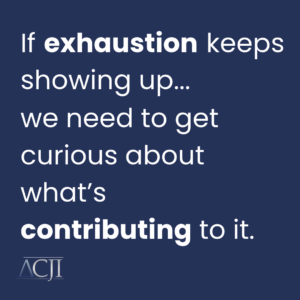
If exhaustion keeps showing up, we need to get curious about what is contributing to it. Are expectations realistic? Can people ask for help? Do they have a say in decisions that affect them? What happens when someone says they are at capacity?
These are leadership and implementation questions. They ask us to examine whether our commitment to caring for people is reflected in how we organize the work.
From Self-Care to Collective Care
Many innovations are emerging across the country, centering worker wellness in new ways. In Colorado, Heal the Healers events bring multi- agency community partners together to pause, share experiences, and reconnect through movement, multiple healing modalities, and peer support. Experiences like these create room for people to receive some of the care they give so generously.
The opportunity is to carry that care into everyday practice, in every level of an organization.
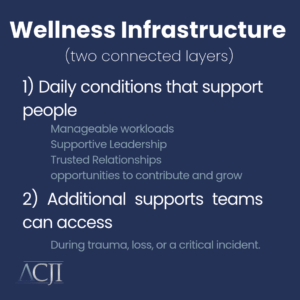
That means paying attention to two connected layers. First, the daily conditions that support people, including manageable workloads, supportive leaders, trusted relationships, and opportunities to contribute and grow. Second, the additional supports people can access during trauma, loss, or a critical incident, including clinical care and peer support.
At ACJI, we call this wellness infrastructure. It requires shared responsibility across teams, organizations, and partners, with the people doing the work helping shape what support looks like.
Have the conversation, then try something
Start by asking your team what helps them feel supported and what makes their work harder. Make room for honest answers. Then choose one change you can make together.
Our free downloadable tool offers a starting point for that conversation. Use it to consider what taking care of your people could look like in everyday practice.
After you try a change, check back in. Is it helping? What needs to be adjusted? Caring for people takes ongoing attention, just like the work we ask them to do.